

The energy sector is changing, and along with it, the people who work within it are changing too. Among them are women who teach, conduct research, work with technologies, and help shape a new energy system.

The energy sector is changing, and with it the people working in it. Among them are women who teach, research, work with technologies, and help shape a new energy system.
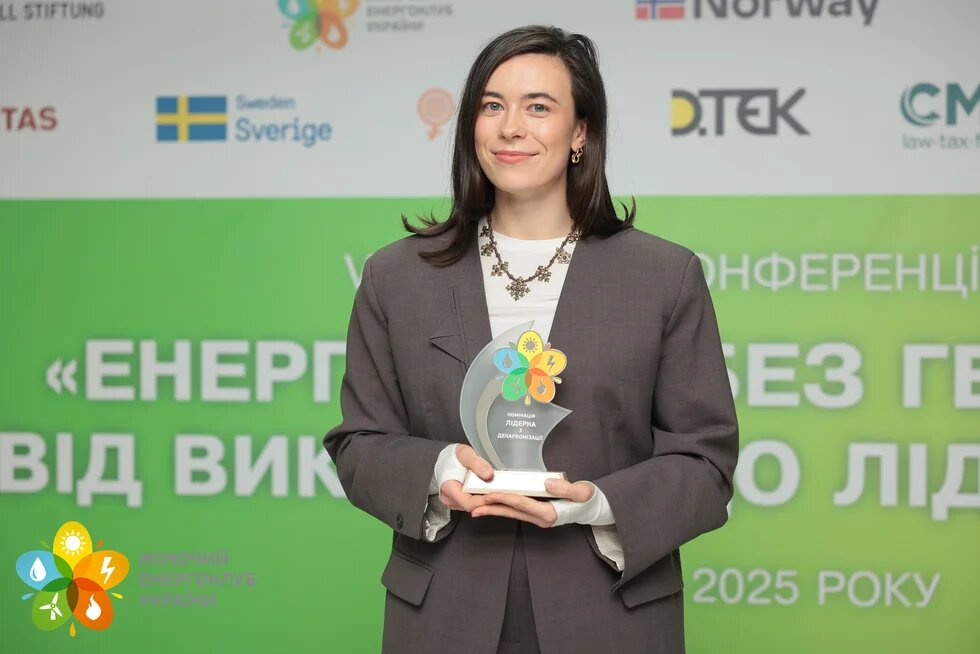
It is these professional stories that the Women in Ukrainian Energy competition of the Women’s Energy Club of Ukraine reveals every year. In 2025, the Dean of the Faculty of Electrical Power Engineering and Electromechanics of Vinnytsia National Technical University Vira Teptia, researcher Mariia Lopushanska, and Director of the European-Ukrainian Energy Agency Anastasiia Vereshchynska won in the Female Educator, Female Researcher, and Female Decarbonization Leader nominations, respectively.
Their stories show different but equally important areas of women’s professional participation in the transformation of the energy sector: from training a new generation of specialists to research helping make informed decisions on the development of energy projects.
Vira Teptia: “I Worked My Way Up from the Bottom”
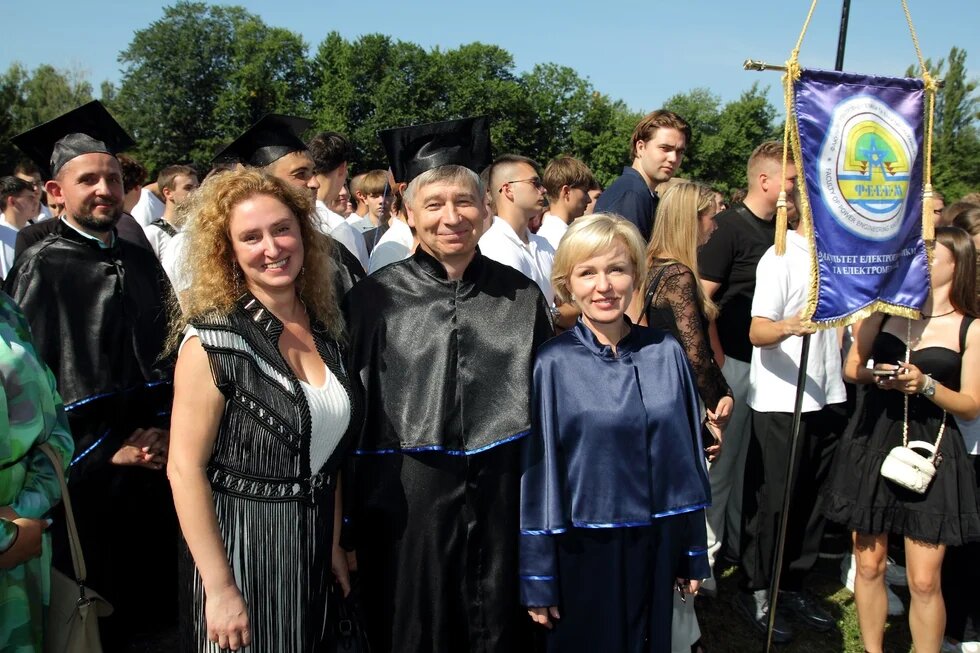
Vira Teptia has been working at Vinnytsia National Technical University for over 30 years. In 2024, she became the first female dean of the Faculty of Electrical Power Engineering and Electromechanics.
Her own story in the energy sector started back in childhood. Since her parents worked at the Ladyzhynska Thermal Power Plant, it was not from textbooks that she knew what energy workers do.
“I can probably say I already present a dynasty. My parents worked at a power plant. I myself have always been more inclined toward engineering and exact sciences. I really loved math at school,” she says.
As her father worked in the electric facility of the Ladyzhynska TPP, small Vira could the plant from the inside.
“When I was a child, I heard the phone ringing endlessly on weekends — if some problems arose, they’d call my dad. That is, as a kid, I could see how the plant actually works.”
School career guidance influenced Vira’s professional choice, too.
“Our school was overseen by the plant helping it and arranging excursions. So, actually, my father, my mother, and my sister working now are all related to the TPP.”
In the 1990s, Vira was choosing between the energy sector and economics.
“It was quite difficult to find a job then, but the energy sector offered prospects for later employment. So, I chose the energy sector.”
From Internship at the Plant to University
For Vira Teptia, university studies were not just about lectures. Having finished their first year, students underwent a longer internship program and acquired a working profession.
“After our first year, we had a two-month internship in a working profession. We received the qualification of a mechanic-installer including practical work experience.”
Vira did her internship at the Ladyzhynska TPP — already as an employee. She worked as a lineworker, observing the plant’s internal work processes on her own.
“I was assigned to the electric facility and received a salary. At that time, it was very important for students, for in most cases, they weren’t paid. I could see from the inside how the TPP worked — from fuel supply to the open switchgear. It was a highly valuable experience, and now I understand that more than ever.”
Having completed her studies, Vira stayed to work at the university.
“I started my career with an ordinary position — a training foreman in laboratories. Then I worked as an engineer, moved to an assistant position later, and started teaching. After that, I became a senior lecturer and an associate professor.”
Thus, our heroine gradually climbed all the ranks of the academic career.
“I worked my way up from the bottom. I understand how the energy structure works from the bottom up. I understand the work processes at the plant and substations. And this experience is very important and highly valuable to me.”
Vira says her path to the dean position can hardly be called a clear career plan.
“I just worked. I performed my duties conscientiously, I think. But, I probably never thought I would now hold such a position.”
Before her appointment, she worked as a deputy dean for two years. When the position became vacant, she was offered to head the faculty.
“I’m grateful to the rector of our university for showing such trust in me. After all, I’m the first woman to hold the position of dean of such an energy faculty.”
Education for the Changing Energy Sector
Though administrative work takes much time, Vira Teptia continues to teach.
“I really like teaching. I don’t want to lose my practice.”
She considers personal communication with students to be particularly important.
“There have always been talented students. You just need to open up their potential. Sometimes, students don’t open up fully, and you need to see this. To do that, you need to communicate with them.”
That is why the educator prefers face-to-face learning.
“I really like it when students learn offline, when we can communicate directly in classrooms. I can see their eyes, I can see people in front of me, and I can communicate with them.”
In her opinion, technical knowledge alone is no longer enough for a modern electrician and names the three major components needed.
“First of all, a strong technical base is necessary. To become a good engineer, a good specialist, one needs a technical base, which is exactly what a university can give.
Second, digital skills are required. Digital competencies are crucial now, since everything is being automated. It is important to know or at least understand modern software complexes.
And the third component is the so-called soft skills. For electricians to be able to work in a team and communicate with each other, they must have critical thinking.”
One more necessary feature Vira Teptia notes is the ability to adapt quickly.
“In the energy sector and engineering, changes are rapid now. That’s why a modern electrician shouldn’t be a narrow specialist but should be able to master new knowledge, understand how the electric power industry works, and adapt to modern conditions.”
The faculty also develops new areas, in particular renewable energy and hydropower.
“Recent events following the outbreak of the full-scale war have changed the energy sector. We are moving from centralized control to decentralization and digitalization. Consequently, there’s currently a great demand for renewable energy sources and hydropower.”
This year, the dean says, the faculty has almost doubled the number of applicants compared to previous years.
“We not just teach the basic knowledge, basic energy concepts, but also consider new changes, including digitalization and decentralization. We tell students about Smart Grid technologies, trying to teach them this.”
Vira Teptia believes that energy education should be more aligned with the actual industry needs.
“Energy education should be, and should get, more practical, focusing more on current changes and modern challenges in the energy sector.”
This requires cooperation between universities and employers.
“We won’t be able to purchase everything in education ourselves. Budget organizations can’t buy everything we need. I hope our stakeholders, i.e., employers, will keep helping us.”
Companies already assist in creating laboratory stands, for they need trained specialists.
“They require experts right away and are willing to help so that then our students, our graduates could come to them and work at once having already gained some skills.”
Simultaneously, Vira Teptia is engaged in scientific work. Her papers can be found in publications indexed in Scopus and Web of Science. However, she considers her achievements to be part of the scientific school’s work.
“This is our team’s work. We have powerful scientific schools.”
“We Need to Change the Belief That Only Men Can Lead”
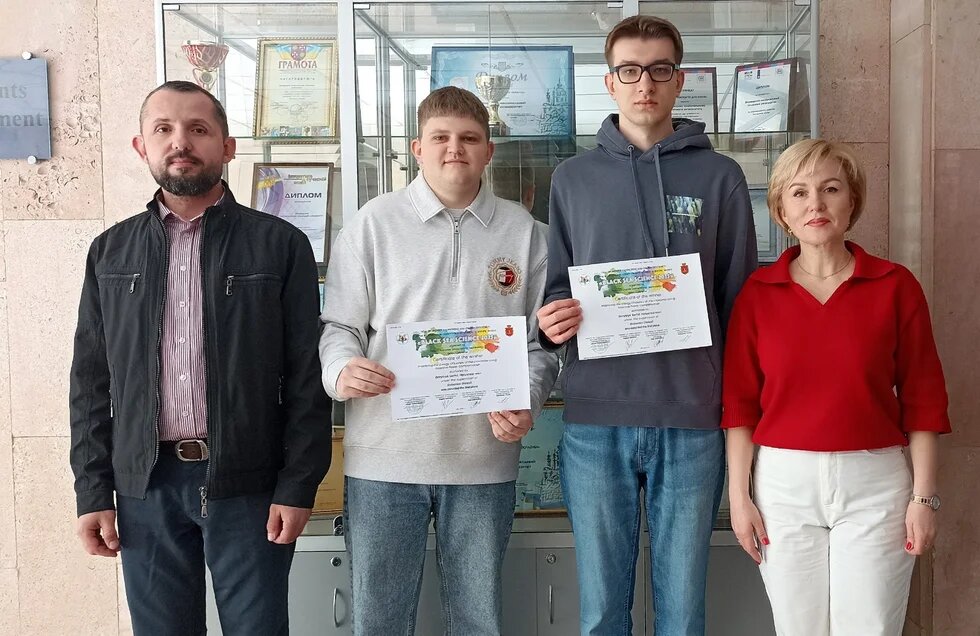
Victory in the Women’s Energy Club competition came as a surprise to Vira Teptia.
“To be honest, it was unexpected and very pleasant, as you see that your work is noted not only by the team, inside the university, but also beyond it.”
It was especially important for her that her candidacy was suggested by the representatives of those enterprises with which she cooperates.
“They saw my work, they appreciated it, and they suggested me for this nomination. I was very pleased by that.”
Vira considers it essential to show women professional development opportunities in the energy sector.
“Such events demonstrate that women can realize themselves, implement their own ideas, develop, and build a successful career in so-called ‘male domains.’ We need to change the belief that only men can be in management positions in the energy sector or engineering.”
Her own vision is simple: “You need to understand that women can do their job in any industry — but they should like it.”
Meanwhile, Ukrainian energy sector, the educator believes, is currently gaining an experience that other countries do not have.
“People all over the world admire our energy sector, after all these blackouts that we’ve experienced and survived, they just give a standing ovation to our electricians. This is the experience that, probably, only our country has in the world now.”
In her opinion, Ukraine is actually forming a new model now.
“We are essentially creating a new energy sector for ourselves, for the world, and for Europe — a decentralized and more stable one, as well as less dependent on possible damage to the central system. The main resource of the new energy sector is people. Our people are golden,” Vira Teptia recaps.
Mariia Lopushanska: “What Ukraine Will I leave to my grandchildren?”
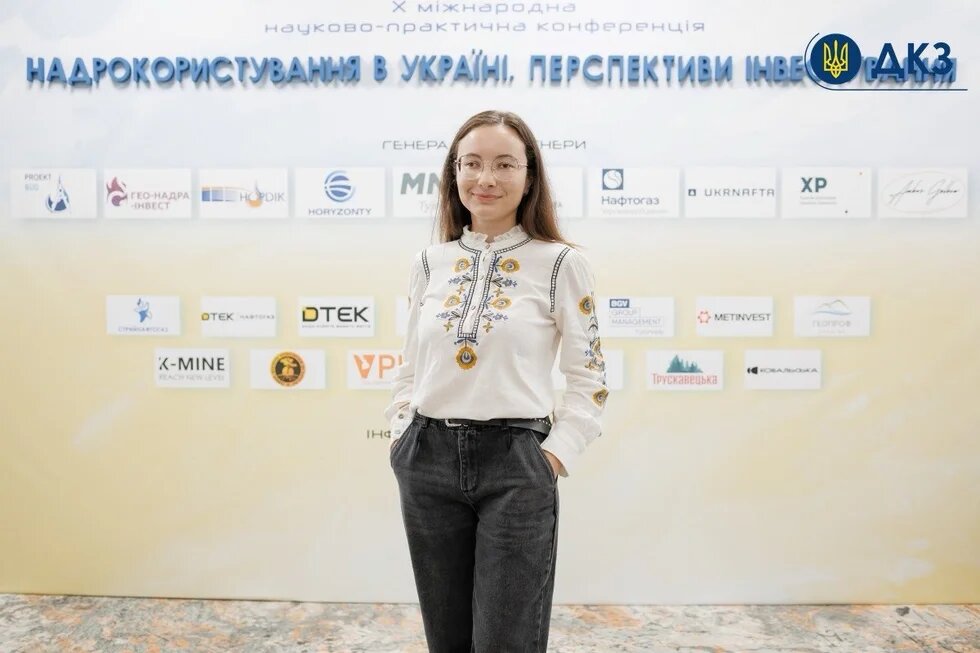
Researcher Mariia Lopushanska has a different professional path. She was interested in natural sciences back in childhood. Today, Mariia studies the impact of energy facilities on the environment and helps identify areas where renewable energy can be developed without harming valuable natural areas.
Her professional portfolio includes five diplomas with honors, academic research, work in an energy company, and experience in environmental expertise.
From Geography to Energy
While still at school, Mariia realized she wanted to dedicate her professional life to geography. However, she chose engineering first.
“I’ve been always interested in nature and environment. I felt curious and dreamed of focusing my life on geography. My parents didn’t impose any particular opinion — they supported me in the area I chose. When gas pipes were laid in my native village, I was ten, and, seeing this process, I decided to go and study gas supply. That’s how I got an engineering degree, but still, I didn’t abandon geography.”
Later, she added environmental awareness to her engineering education. She got her first professional experience at the age of 19, working as an energy engineer in the college that she had previously graduated from with honors.
Today, Mariia Lopushanska emphasizes that it is vital for a modern ecologist to have engineering knowledge, since a specialist must combine expertise in many areas.
Where to Build Renewable Energy Facilities
Mariia became interested in solar and wind energy ten years ago, when there were significantly fewer such facilities in Ukraine.
“I’ve always been interested in renewable energy, i.e., solar and wind power plants. But information on them was too scarce back then. I was interested in what impact they can have, where to build them, why they are built that way, and why exactly these technologies are used. When I entered a doctorate program, I already understood clearly that I wanted to study renewable energy and geographize this topic — to see where exactly and under what conditions it can be developed.”
The expert dedicated her doctoral thesis to renewable energy, focusing her research on the Lviv region, where she lives and works. Today, Mariia creates maps that can help energy companies assess the area before the project start — taking into account rivers, nature reserves, the Emerald Network, distances to residential buildings, and other restrictions.
“If I have an allowable area within a radius of, say, 10 kilometers from the connection point, I assess where renewable energy facilities can be installed and where they can’t. I identify all the potential risks and restrictions — rivers, distances from residential buildings, nature reserves, and the Emerald Network. I map all this, visualize it, and show it to the investor: Here are the sites that can be considered for construction, and here are the ones that can’t.”
The expert notes that such maps are already used to select land plots for energy projects and shares her experience.
For example, once, she was asked for advice on building a hydroelectric power plant on a river recognized as part of the Emerald Network. Mariia explained to the investor that this was impossible due to considerable environmental restrictions. At first, he was very disappointed, but a year later he thanked her for advising not to invest money in an unrealistic project.
For Mariia, this is an example of how environmental assessments should help the energy industry avoid faulty decisions.
“At the Intersection of These Three Spheres, Ecology Must Come First”
Mariia sees her professional work at the intersection of energy, economics, and ecology. When it comes, for instance, to choosing a location for a new energy facility, her position is clear:
“At the intersection of these three spheres, ecology must come first.”
Mariia considers renewable energy to be one of the key domains of the future. Herewith, she is convinced that its development should not occur through the destruction of valuable natural areas, which means that environmental studies should be conducted at the project planning stage.
Changing the Energy Sector from Within
Working in a company that produces hydrocarbons may seem contradictory to the ecologist. Mariia Lopushanska explains, though, that she sees this work as an opportunity to influence how projects are implemented while developing the renewable energy sector.
“The Zahidnadraservice Group of Companies is actively developing renewable energy projects and plans to implement renewable gas production ones. We understand that it is impossible to say, ‘Stop production’ now, since hydrocarbon production is a strategic source of energy for Ukrainians,” says Mariia.
In her work, she focuses on reducing the impact of the company’s activities on the environment, preventing violations of environmental legislation, and identifying potential risks in advance.
“My major mission is to minimize impacts and prevent the breach of environmental law during operations — as well as screen potential risks during the pre-project assessment of projects,” she explains.
The combination of traditional energy with the development of renewable sources was one of the reasons for Mariia to choose this company. She says it is important for her to be involved in the processes that can contribute to the energy independence of Ukraine.
“The company’s profile includes not just mining but also renewable energy. It was because of the opportunity to be a part of Ukraine’s energy independence that I joined the company.”
Herewith, Mariia considers environmental issues not only within individual projects. It is important for her to take into account possible environmental impact throughout the entire life cycle of a project. She believes renewable energy expansion to be part of a broader process.
“This sphere is vital, as the development of renewable energy sources is a contribution to our shared energy-independent future.”
“What Ukraine Will I Leave to My Grandchildren?”
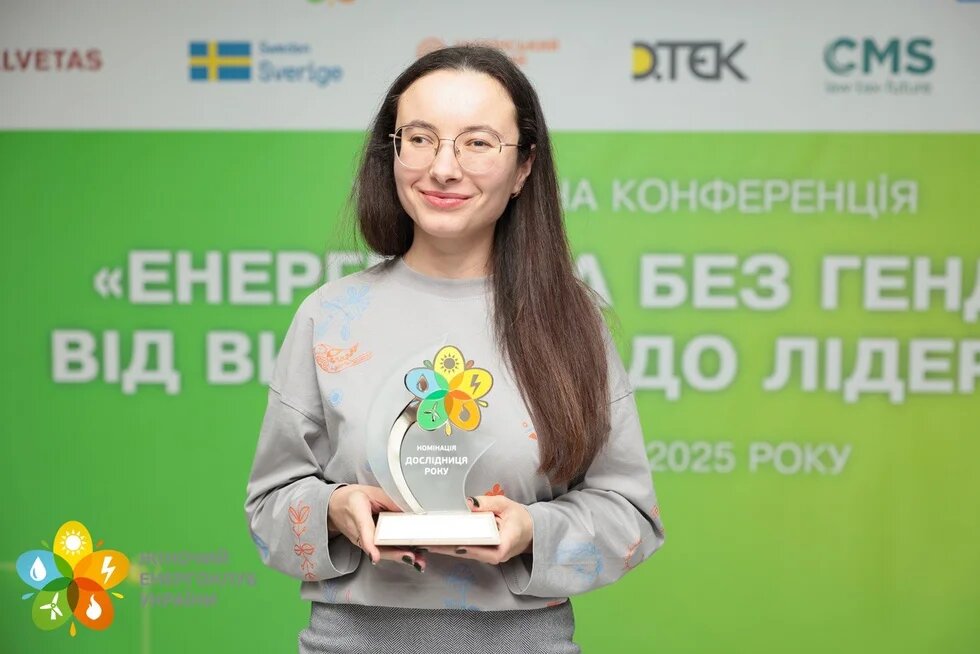
For Mariia, professional recognition is not only about awards. It is more important whether her expert opinion is trusted and whether it helps make decisions.
“I’m very grateful not only to my company, but also to my colleagues and those organizations that turn to me and listen to my advice on implementing projects.”
The researcher notes that winning the Women’s Energy Club competition provided her with new professional contacts and an opportunity to be heard by a wider circle of people.
However, Mariia Lopushanska’s core motivation is much broader than professional recognition.
While studying the experience of one of the Austrian companies, she paid attention to their main principle — to think about what kind of world will be left to future generations.
“I really liked their approach —‘the world for our grandchildren,’ when they think not even about their children but already about what kind of planet they will leave to their grandchildren,” Mariia emphasizes. “And I would rephrase here: Ukraine for our grandchildren. This is probably my position, which I work on daily, and my vision, goal, and objective toward which I’m moving. Every day, waking up in the morning, I ask myself: What Ukraine will I leave to my grandchildren?”
Profession without Stereotypes
At one time, Mariia also heard the question of what a woman could do in a “male” specialty. Today, she opposes such a division.
“If a specialist does their job, they must do it professionally. There should be no male or female specialty. There is a specialty, and, if I like it, I study, work, and grow within it.”
In her opinion, women working in the energy sector need more public coverage.
“When we enter ‘women in the energy sector’ in the search engine, we will see very few publications. Electricians are more like practitioners-performers. They routinely perform their work, a set goal, and purpose, but they are not so public. Consequently, the specialty has little prestige. Few women choose the energy sector because of the stereotype, ‘It’s a men’s domain, it will be difficult for you there, and you won’t work there.’”
That is why she considers professional competitions and women’s energy sector communities important.
“Such competitions are crucial in order to talk about the role of women in what is often believed to be men’s domain. They break many stereotypes and for me, they provide a significant impetus for professional growth, self-discovery, and new opportunities — as well as for professional networking. In my opinion, the Women’s Energy Club of Ukraine is a good network and I’m very grateful to join it and cooperate with it.”
Mariia advises young people who are just choosing their profession not to be guided by generalizations.
“You should never stop. Choose a profession according to your soul’s calling rather than the stereotypes imposed on you.”
Anastasiia Vereshchynska: “Renewable Energy is the Basis for Decentralization”
Anastasiia Vereshchynska did not plan to work in the energy sector. As a child, she wanted to become a doctor, but then she chose law, graduated from the Faculty of Law of the Kyiv-Mohyla Academy, and began working in corporate law. Later, though, she realized that employment in a large law firm no longer gave her a sense of professional development.
A project related to the energy sector became a turning point. Anastasiia began looking for a job in the sector and soon joined the parliamentary energy committee. There, she saw energy not as just a separate industry but as a complex system where economics, law, state policy, business, and international relations intersect.
“Overall, law is a very good base on which you can build almost any career, as long as it does not require some super-technical knowledge. It provides a lot of methods and tools that significantly enhance critical thinking and an analytical approach to things in general. This is what makes this profession quite versatile, I suppose,” she says.

In parliament, Anastasiia worked on electricity market reform and European integration bills. Later, she advised the government and was engaged in renewable energy and low-carbon development issues. Her analytical experience was complemented by practical one — after the start of the full-scale war, she worked for over a year at the Energy Act for Ukraine Foundation, which installed solar power plants for schools and hospitals.
“I wanted to do some work that would have a significant applied effect. With all due respect, the analytical reports we made couldn’t cover this need for me. So, I strived to do something having a tangible effect,” explains Anastasiia.
Today, she heads the European-Ukrainian Energy Agency (EUEA), an organization that works on sustainable energy, renewable sources, energy efficiency, and attracting private investment.
Its activities mainly assume helping businesses and the state find solutions to develop the new energy sector. The team collects information from companies about the problems facing them during project implementation, analyzes these issues, and prepares proposals for state bodies.
“According to the legislation on 1, we are lobbyists. We are exactly the entity that should be engaged in this, that should represent the interests of businesses in their interaction with state bodies. We hold meetings, we organize events, we write letters, and in fact, this is how we quite often achieve the goals we set for ourselves,” says Anastasiia.
The main objective of such work, she notes, is to create conditions under which investors will be able to implement projects necessary for Ukraine’s energy sector.
“Our overall goal is to make the work of investors in the renewable energy sector in Ukraine, as well as their interaction with the state, as transparent as possible, and ensure that they can much more easily implement projects that we now critically need for the energy sector’s recovery.”
Renewable Energy as the Basis for Decentralization
The full-scale war has also changed the very vision of the future energy system. Russian attacks have pointed to the vulnerability of large centralized facilities. Therefore, Anastasiia believes, Ukraine needs an energy sector comprising a larger number of distributed sources of generation.
Here, she assigns an important role to renewable energy.
“We quickly realized during this full-scale war that the centralized system of organizing energy facilities in Ukraine is very, very vulnerable. The need for decentralization appeared instantly. And so you think: Okay, there is a request for decentralization, but what can fulfil it? Renewable energy facilities are precisely the basis for further decentralization of the energy sector.”
In her opinion, distribution is one of the vital advantages of such projects. As an example, she mentions wind power plants with individual turbines located at a considerable distance from each other. In this case, damage to individual installations does not necessarily cause the shutdown of the entire plant.
That is why, says Anastasiia, the state’s role is not quite to directly fund such projects but to create conditions under which private business will be ready to invest in them.
How to Make Investments Possible
Among Anastasiia’s work responsibilities at EUEA is finding mechanisms that will reduce risks for investors. One of these tools is an offtake2 — a guaranteed sales of generated electricity. It is important for banks, as it regards the future income from electricity sale that enables assessing whether a project will be able to repay the loan.
After the start of the full-scale war, this risk turned particularly acute.
“We understood that there are at least some options for military risks and project insurance in general. But there was nothing at all for offtake agreements. Banks won’t do anything without an offtake, without guaranteed offtake agreements. We had to manage this.”
Together with private companies and partners, Anastasiia joined the development of an international fund concept, which should have become a kind of financial cushion for investors and banks. It is not about the state or the fund constantly buying up all the electricity produced, but about covering the risk if the income planned from its sale is not received.
Anastasiia calls this case one of the main professional results of recent years.
“Two years have actually passed. It was literally my first months in the association when we started working on this idea. I’m extremely proud that it worked out, because this is an extraordinary example of international advocacy. This is exactly the case when we did something that will have a long-term effect and bring new real investments in the Ukrainian energy sector.”
Together with international partners, she continues working on the issue. After all, insurance of war risks for energy projects is the next big challenge, Anastasiia notes.
“We now see that many other sectors are also suffering considerably. We understand that currently, war risks are already a huge problem. No investor can move forward without managing them. Insurance companies, too, lack resources to take on energy facility insurance projects on their own.”
In her opinion, this issue will have to be resolved together with European partners, governments of other countries, international financial organizations, and insurance market.
Batteries that Change the Energy System
Another area that Anastasiia calls important for the future energy system is electricity storage.
When Ukrainian business began to take an active interest in battery systems, EUEA joined the development of rules for special auctions and ancillary services. For Anastasiia, this experience is important as it demonstrates how the private sector can signal to the state the need for new rules.
“I’m very glad that, having cool private companies which have already started to take an interest in this and study the issue, we could get feedback from them about the problems they see. This gave us a lot of information to be transformed into specific proposals, which are already fixed in the legislation and are, actually, the basis of how the entire regulatory ecosystem for storage systems is built.”
Such projects, Anastasiia believes, demonstrate that decarbonization is not only about reducing emissions. For Ukraine, it is simultaneously a question of energy resilience, new technologies, investments, and restructuring of the system itself.
“I Want Them to Choose the Energy Sector”
Another issue that Anastasiia considers part of the energy sector transformation is the people who will work in it tomorrow.
She speaks about it both as a CEO and as the head of a team mainly comprised of young women. For her, it is essential to not only attract them to work, but also show that the energy sector can be a long-term professional choice.
“I feel a huge responsibility in the fact that I really want to get them interested in it. With or without me, when they choose their next job, I do want them to prioritize the energy sector.”
Anastasiia is convinced that the sector needs people with different professional backgrounds, with her own path from law to energy being an example.
She advises young professionals not to be afraid of energy sector complexity and to allow themselves to explore new areas.
“I suppose that obstinacy and perseverance will always be valued. You need to understand that comprehending the energy sector can be difficult. But this doesn’t mean this should stop you, because, for instance, I’m a lawyer, and I did figure out how the energy market works.”
Technical knowledge, in her opinion, is not enough, though. No less important are curiosity, the ability to learn, and humanity.
“It seems to me that it is much more important to remain human in any work. When we talk about soft skills and empathy, a much deeper level of understanding people, their actions, and so on, is crucial.”
Supporting Those Changing the Energy Sector
That is why professional communities are vital to Anastasiia, in particular the Women's Energy Club of Ukraine and its competition. She speaks of it not only as a way to celebrate individual professional achievements, but also as an opportunity to create an environment of support and exchange of experiences.
“I guess that in general, both the Women’s Energy Club and this competition are about creating a supportive community within the sector for women having a lot of common interests. One of such significant common interests is actually the work in the energy sector."
Anastasiia believes that such communities are needed not just for professional networking. They help women see more opportunities, stay in the sector, and support each other in difficult professional situations.
Her own story began with a search for a new opportunity, too. Legal education, work in parliament, analytics, charity projects, partnerships with business, and international advocacy — all of this eventually developed into a profession that Anastasiia did not plan in her childhood.
Now, her job is to help create the conditions for an energy sector that will serve Ukraine after the war: a more distributed and technological one, open to private investment, and based on renewable energy sources.
At the same time, her job is to help form a community of people who will build this energy sector.
“I really want as many capable people as possible, who are now thinking about what to do next in life, perhaps feeling a little disoriented and lost, to think about the energy sector.”
For Anastasiia Vereshchynska, this is no longer just a professional field. This is a space in which she sees an opportunity to combine law, analytics, international cooperation, work with business, and, most importantly, concrete changes that can determine the future of Ukraine’s energy sector.
The Energy Sector that People Built
The stories of Vira Teptia, Mariia Lopushanska, and Anastasiia Vereshchynska differ in the experience and professional tasks they talk about. However, they demonstrate a change: Modern energy sector needs specialists who are constantly learning, see beyond the boundaries of one specialty, and are ready to work in new conditions.
The cases of the winners of the Women of Ukrainian Energy – 2025 competition show one more important thing: Women’s professional achievements should be visible in the energy sector. After all, such stories not only tell about the path already traveled, but also expand the idea of what one can do in modern energy sector and what professional opportunities it opens up for the next generation.
It is from such daily decisions, research, training, and professional work of people that the energy sector of Ukraine of the future is formed.
Background information
NGO Women’s Energy Club of Ukraine (WECU) is an independent professional association for the female employees of Ukraine’s energy sector, based on voluntary participation.
WECU initiated the annual Women in Ukrainian Energy competition in 2019. The contest is held under the auspices of the Heinrich Böll Foundation, Kyiv Office - Ukraine.
The goal of the contest is to recognize women’s achievements in the energy sector, bolster their role in the field, and encourage them toward further achievements, both in the energy sector and related fields. The award is meant to encourage participants to promote gender equality in the energy sector, in their workplace, professional training, research, and field-specific journalism.
More information about the Women of Ukrainian Energy – 2026 competition and participation conditions can be found in the official competition announcement.
Footnotes
- 1
Lobbying is a legal and open activity during which people or organizations try to influence the decisions of government bodies in the interests of their clients or their own business.
- 2
In the energy sector, an offtake is an agreement under which a buyer undertakes in advance to purchase electricity that will be generated by a future power plant. Thus, the producer knows to whom they will sell electricity before the plant’s construction