

Across the country, solar stations, cogeneration units, and “solar roofs” are keeping water flowing, homes warm, and hospitals running during prolonged blackouts. The full-scale war has turned energy from a technical niche into a matter of human security. At the 20th “Kyiv Dialogue” conference, municipalities and civil society emphasized that decentralized energy is delivering real resilience — yet scaling it further is impossible without citizens at the center.

What do a drinking-water well in Mykolaiv powered by a solar station, cogeneration units in Khmelnytskyi, and “solar roofs” on hospitals and residential buildings across the country have in common? All these solutions were implemented to ensure cities maintain stable access to water, heat, and uninterrupted hospital operation during hours-long power outages.
The full-scale war has turned energy from a technical topic for a narrow circle of experts into a security concern for millions of people. At the 20th annual Kyiv Dialogue conference, municipalities and civil society organizations reiterated that while decentralized energy has already proven effective in communities, it cannot be scaled without the active engagement of everyday citizens.
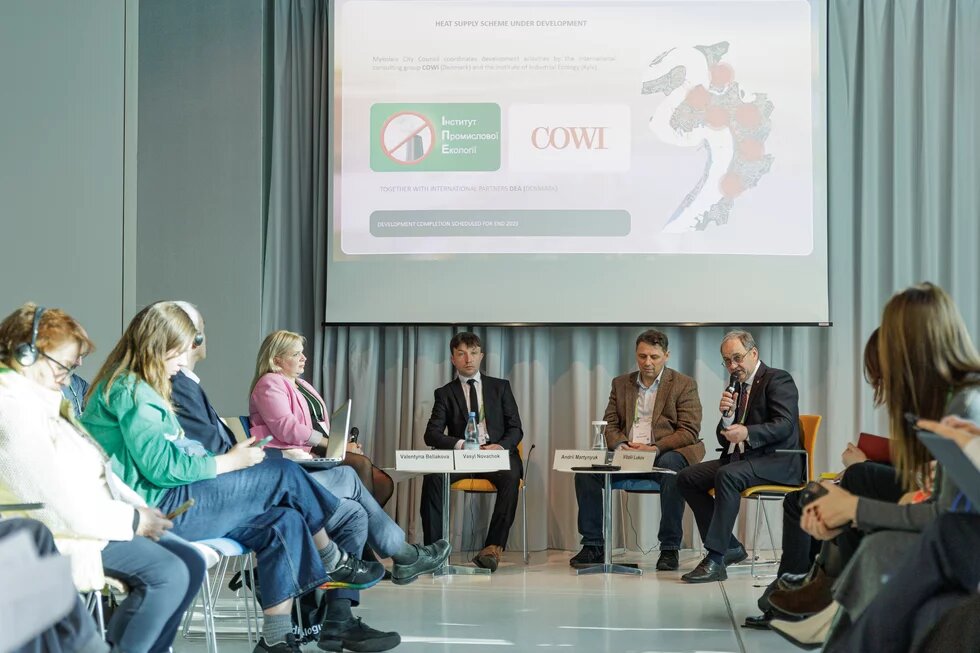
On November 18–19, 2025, 20th annual Kyiv Dialogue conference — “Ukraine’s Resilience and Reforms During Wartime: The Role of Local Self-Governance” — took place in Berlin, with European Exchange | Europäischer Austausch gGmbH as the principal organizer. Within the conference program, the Heinrich Böll Foundation and the German Platform for the Reconstruction of Ukraine hosted a dedicated panel discussion on decentralized energy as a pathway to local security.
The panel featured representatives from the Ukrainian cities of Mykolaiv and Khmelnytskyi, as well as the NGO EcoClub from Rivne — a long-term community partner in renewable-energy development:
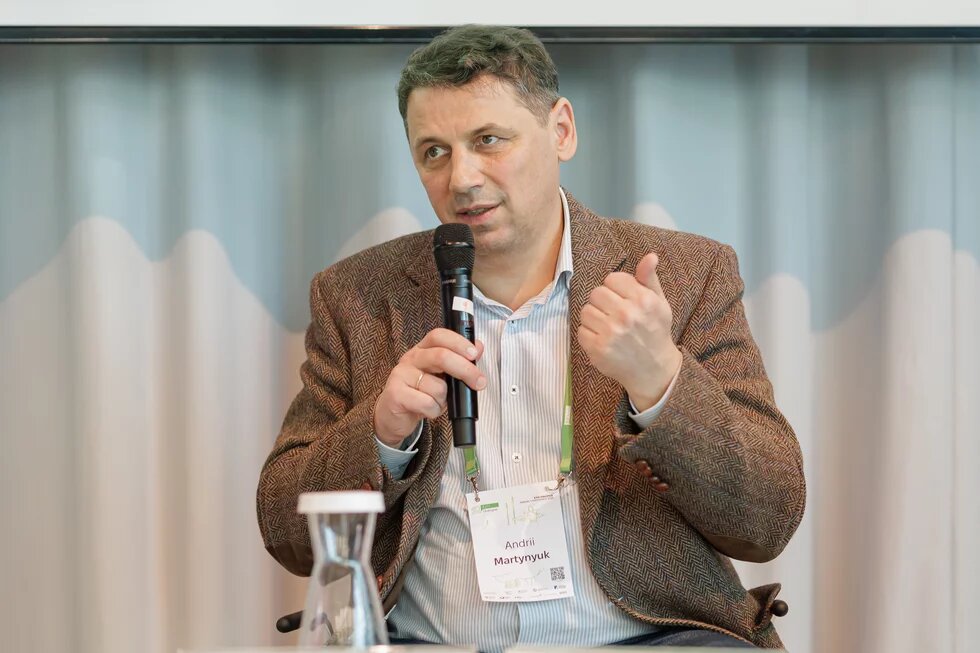
- Andrii Martyniuk, Executive Director of EcoClub NGO;
- Vitalii Lukov, First Deputy Mayor of Mykolaiv;
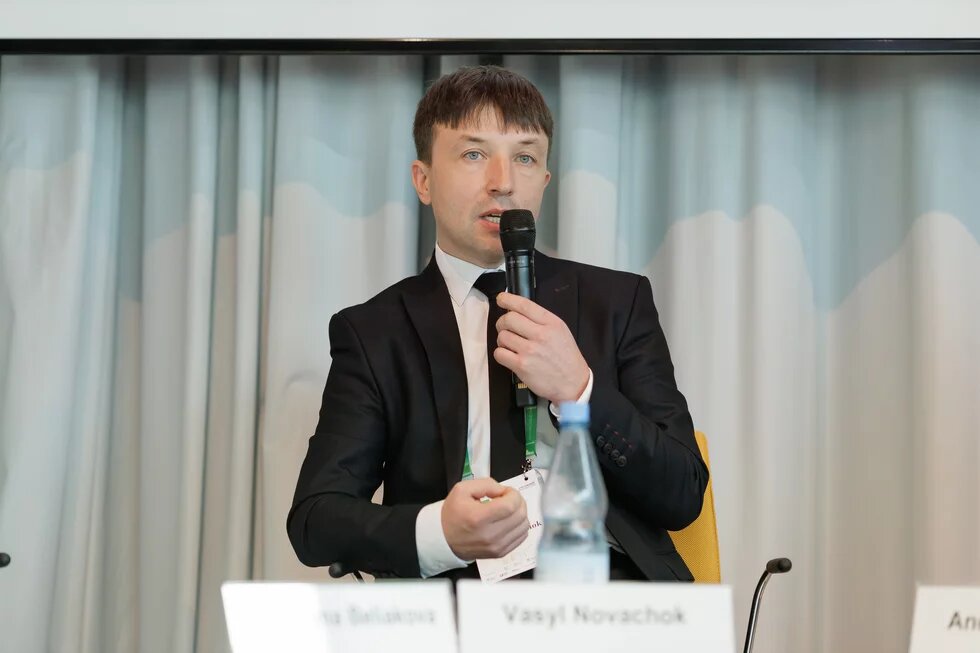
- Vasyl Novachok, Deputy Mayor of Khmelnytskyi;
- Moderator: Valentyna Beliakova, President of the Women’s Energy Club of Ukraine (WECU).
Their stories are not abstract reflections on the energy transition, but concrete, functioning solutions that help their communities maintain essential services on a daily basis. Read the key insights from the discussion below.
Renewables as a Lifeline in the Wartime
Before 2022, renewable energy was, for most Ukrainian mayors, more of a “nice addition” to infrastructure projects than a true priority. This is confirmed by EcoClub’s Executive Director, Andrii Martyniuk:
“Before the war, many local leaders viewed renewable-energy installations as a ‘nice-to-have, low-priority perk.’”
Today, they see them as an economically sound and security-critical solution. The turning point came when missile and UAV attacks began systematically targeting energy infrastructure, and communities saw first-hand how solar power stations with battery storage allowed them to pump water or perform surgeries in hospitals even during prolonged blackouts.
One example is a solar power plant built with EcoClub’s support at a water-intake facility in Sumy. During hours-long outages, it kept the system running: the city lost electricity, but its water supply wasn’t jeopardized.
“A city can survive several days without electricity — uncomfortably, of course. The lack of water, on the other hand, becomes a critical problem,” Martyniuk concludes.

How Mykolaiv Is Fighting for Water — and for Its People
Vitalii Lukov, Deputy Mayor of Mykolaiv, begins with a mundane but telling detail: the electricity-outage schedule in his city, where even the best-case scenarios involve several power cuts every day. Under such conditions, the city’s key task is not only to withstand air strikes, but also to prevent people from leaving.
“Today, communities across Ukraine — including Mykolaiv — are fighting a quiet battle for their people. Our task is to find the ‘anchors’ that will keep residents in the community,” Lukov explains.
These “anchors” are very specific:
- Physical safety — timely alerts and access to shelters;
- basic utilities and services — water, electricity, medical care, public transport;
- kindergartens and schools, essential both for education and for giving families a framework around which to build their daily lives.
After the city lost its centralized water supply in 2022, Mykolaiv organized more than 250 drinking-water distribution points within the first months. Although the centralized water supply network is gradually being restored, the city is deliberately investing in autonomy.
Together with EcoClub and their Swiss partners, the Mykolaiv Water Utility (Mykolaivvodokanal) is implementing a series of projects to equip its pumping facilities with solar power stations and battery-storage units. One such project concerns a neighborhood that relies on the city’s only artesian well with high-quality water. Previously, the area depended on water pipelines; however, every time the power went out, tap water disappeared as well. After the launch of the solar-plus-storage system, the neighborhood will be able to receive uninterrupted water supply even during extended blackouts.
“Generators are only an emergency solution. They can’t run for dozens of hours. But a solar power plant equipped with storage gives us at least 24 hours of autonomous water supply — and even more in summer,”says Lukov.
Under a signed agreement with the Swiss side, within 1–2 years most pumping stations will be equipped with solar power systems and storage units. In practical terms, this means that critical water supply and wastewater services will continue operating even during power outages.
Hospitals, Trolleybuses, and a Care Home — All Powered by the Sun
Medical infrastructure is another lifeline of resilience. Several hospitals in Mykolaiv are now equipped with solar power plants and battery storage systems. Their installation was supported by international organizations, with some built jointly with EcoClub. Altogether, these stations provide hundreds of kilowatts of generating capacity and hundreds of kilowatt-hours of storage.
“Hospital staff can now perform both planned and emergency surgeries even without any electricity from the grid. This is crucial for the quality and timeliness of medical care during wartime,” emphasizes Lukov.
A similar level of autonomy has been achieved by the city’s geriatric care home — a facility for elderly residents who can no longer care for themselves. Thanks to solar energy and battery storage, its essential systems can operate for roughly half a day without any external power supply.
The transportation sector is adapting as well. Mykolaiv has upgraded its entire trolleybus fleet, and about half of the vehicles can now travel up to 20 km autonomously, without relying on overhead wires. Meanwhile, the city is developing a network of municipal EV charging stations, and part of the public transport fleet has switched to electric traction following the acute fuel shortages of 2023.
Khmelnytskyi: 20 Years of Decentralized Power Generation — and Some New Solutions
Khmelnytskyi is home to nearly 300,000 residents and about 30,000 internally displaced people — meaning every tenth resident arrived from a frontline region. Deputy Mayor Vasyl Novachok notes that for many years, the city ranked among the safest in Ukraine in the eyes of its inhabitants. The war revealed that this sense of safety had very concrete foundations — and the energy sector plays a major role.
Khmelnytskyi placed its bet on decentralized energy two decades ago, when its central boiler houses were first equipped with cogeneration units — systems that generate both electricity and useful heat from a single fuel source (in this case, natural gas).
“Back then, it was purely business logic: when a district heating company generates its own electricity, it pays less for the power needed to run its pumps,” Novachok explains.
As of early 2022, the city had 14 such units, and its own generation capacity fully covered the needs of the municipal heating utility. In recent years, Khmelnytskyi has significantly expanded its capacity through cooperation with USAID, GIZ, and other partners — the number and total output of the units have essentially doubled.
Today, the city generates more than 13 MW of electricity, covering roughly 10% of its total consumption. Cogeneration boiler houses offer a clear advantage: they are geographically distributed across different neighborhoods, making them much harder to destroy than a single large power plant.
The downside is dependence on natural gas.
“If we can reach the level of energy efficiency that EU countries have, we’ll be able to forget about the need for imported gas,” Novachok says.
Solar Power Stations and ESCO Models
Khmelnytskyi is also actively banking on solar power generation. With grant support from EcoClub, the city’s infectious disease hospital was equipped with a solar power station that fully covers the facility’s electricity needs, offering not just greater energy security but also significant savings for the hospital’s budget. Other hospitals and outpatient clinics have installed solar stations using their own funds or through ESCO models.
The essence of the ESCO model is as follows: an investor builds a solar station on the roof or land of a municipal institution, and the city purchases electricity from them at a price 10–15% lower than the grid. After about ten years — once the investment has fully paid off — the power station becomes the property of the community. Similar contracts are used to install individual heating units in kindergartens and other public buildings: the investor earns a share of the saved energy costs, and once the contract is fulfilled, the city keeps the upgraded equipment.
Another important improvement is the installation of a large solar power plant at the facilities of the municipal water utility, built with loan funds from a Ukrainian bank at 7% (in UAH). It is already in operation and allows the utility to reduce its electricity costs. However, as in Mykolaiv, the next task is to find reliable solutions for energy storage.
Geothermal Heat Pumps: a Solution Blocked by a Tax
Khmelnytskyi is working on yet another project that could be highly promising for Ukraine — a large geothermal heat pump that would provide hot water for an entire residential neighborhood. The idea is straightforward: use underground heat while powering the pump with electricity generated by the city’s existing cogeneration units and solar stations. The result would be a nearly carbon-free hot water supply for thousands of residents.
The planned solution is currently at the stage of drafting project documentation, developed jointly by the city and EcoClub. The main barrier is a high one-time fee for drilling the boreholes required for such systems. According to preliminary estimates, this single payment amounts to twice the total capital cost of constructing the facility itself.
“If we want to get off the ‘gas needle’ and develop alternative heating sources, we cannot have a situation where the state effectively blocks such projects with a tax,” notes Novachok, pointing to best practices in Germany and other EU countries.
The City’s Strategy and Unpopular Utility Rate Policies
Khmelnytskyi adopted a ten-year strategic development plan, and will begin preparing its updated version next year. The main objective is to become a “green city” with minimal reliance on fossil fuels. In this context, the city has already:
● purchased 50 new trolleybuses through a loan–grant program;
● secured financing for the construction of a modern waste-processing complex;
● planned new wastewater treatment facilities equipped with biogas units, which will both reduce methane emissions and generate additional electricity.
Some goals had to be postponed, as Khmelnytskyi is among the leading cities in terms of the share of its budget allocated to supporting the army — including drones, anti-drone systems, and equipment for the military.
Novachok is most critical of the current utility rate policies:
“In Ukraine, rate policy decisions are made by politicians who then have to face voters. Many good politicians in Eastern Europe ‘ruined’ their careers by raising rates to match market prices, sacrificing their careers to give their respective countries a chance to develop. Ukraine still lacks such politicians.”
In his view, subsidizing low rates “for everyone” preserves inefficiency, eliminates the motivation to save energy or invest in improvements, and burdens the budget.
“Reforms must be implemented during the hardest times. War is exactly the moment to make some unpopular but correct decisions. We need to set market-based utility rates while protecting socially vulnerable groups with targeted subsidies — instead of subsidizing everyone,” he concludes.
The Experience of an NGO: Building Solar Power Plants for Communities
EcoClub, an NGO based in Rivne, brings together communities, international donors, and technical energy solutions within its projects. The organization receives long-term institutional support, particularly from the Heinrich Böll Foundation. This support allowed the NGO to quickly reorganize after the full-scale invasion and address issues that became urgent.
After the full-scale war began, the team looked for ways to help beyond delivering humanitarian aid — and gradually realized that their best contribution would be to continue doing what they do best: helping municipalities build solar power plants. In autumn 2022, they launched the “Solar Aid for Ukraine” initiative. Its goal is to strengthen the energy independence of communities by equipping critical infrastructure facilities — such as water utilities and hospitals — with solar power plants.
The first solar plant they built was completed in 2020 together with the city of Voznesensk in Mykolaiv region — becoming the first solar station in Ukraine to be owned by a municipal water utility. Voznesensk later used municipal funds to expand this station during the full-scale war, increasing its capacity sevenfold (to 350 kW). To date, EcoClub has helped build more than 70 solar stations in various regions of Ukraine.
“Our organization manages renewable-energy construction projects in communities together with local governments. More precisely, we conduct preliminary site assessments, prepare feasibility studies, develop project documentation, attract financing, supervise construction, and transfer completed facilities to municipal ownership. Essentially, we support municipalities and utilities at every stage,” Martyniuk explains.
He notes that the organization has received more than 600 requests, but can realistically process and implement only a portion of them.
Meanwhile, the team also supports communities in energy planning: helping develop local sustainable energy action plans, assessing renewable-energy and energy-efficiency potential, and training staff of municipal institutions and local councils.
“The key to success is continuity,” Martyniuk emphasizes. “You can’t jump from zero capacity to well-designed energy planning in a year. You need to invest in people and institutions.”
Obstacles to Scaling Success: Barriers as Seen by Communities
The speakers’ remarks highlight several systemic problems which, if left unaddressed, will leave decentralized energy nothing more than a collection of isolated success stories.
1. Shortage of Specialists in Local Councils
Local councils often lack specialists capable of preparing feasibility studies, managing projects, or negotiating with banks. Large cities have an advantage, as they can hire consultants or rely on international partners, whereas small communities depend on associations and NGOs that advocate for their interests.
2. Weak Institutions Instead of Strong Policy
The National Energy and Climate Plan of Ukraine for 2025–2030, adopted on June25, 2024, adds weight to the development of small-scale distributed generation. The document sets the direction for future laws and by-laws that will establish the practical rules and market conditions required for its implementation. Another relevant document is the updated Energy Strategy of Ukraine through 2030, which, according to Andrii Martyniuk, is currently for official use only.
However, the problem is that at the community level, these documents have almost no impact.
“We see many projects, but few institutions. The anti-corruption infrastructure has shown that Ukraine is capable of creating strong governing bodies. Energy regulators — responsible for establishing rates for water, heat, and electricity — must work in the same way,” he says.
Without a transparent and independent regulator, and with the current lack of coordination between ministries, the government, and communities, any strategy will remain on paper.
What Needs to Be Done: Three Priorities for the State and Its Partners
At the end of the discussion, speakers were asked to outline a brief action plan for Ukraine and its international partners. Their answers can easily be summarized into three priorities.
1. Invest in People at the Local Level
Decent working conditions for employees of local governments and municipal utilities are not “social spending,” but a prerequisite for reform. Ukraine needs:
● stable and competitive wages for energy managers, energy-planning managers, and engineers;
● training and retraining programs, including for women who want to acquire new professions;
● support for inter-municipal offices capable of managing projects for several communities at once.
International partners should finance not only hard infrastructure projects, but also the teams that operate these facilities.
2. Reform Regulations and Utility Rates
Decentralized energy requires a different regulatory environment. A minimum set of steps includes:
● revising heat rate formulas so that energy efficiency and renewable energy are properly rewarded;
● exempting state- and municipal-owned enterprises, institutions, and organizations from paying for a special permit to use subsoil for purposes unrelated to the extraction of minerals — specifically, for obtaining geothermal energy;
● strengthening the independence and transparency of the national energy regulator;
● developing energy communities so that municipalities and their utilities can supply themselves with electricity, save through their own generation, and sell surplus energy;
● targeted support instead of universal subsidies.
3. Scale Solutions That Have Already Demonstrated Their Effectiveness
Ukrainian communities have already shown, through practical experience, which solutions are effective and economically viable:
● solar power plants with battery storage for critical infrastructure, including hospitals and water utilities;
● cogeneration units that produce both heat and electricity;
● local water-supply systems powered by renewable energy (solar or wind);
● energy-efficient buildings designed and equipped to use energy sparingly and operate partially or fully autonomously from the external grid.
● the task of the national government and its partners is to move from isolated pilot projects to full-fledged programs. This includes:
○ accessible long-term loans for communities, war-risk insurance, and blended credit/grant tools;
○ national support programs for renewable energy and heat pumps for critical infrastructure;
○ integrating Ukraine’s experience into European energy-security policy.
Ukraine remains a country with enormous potential to increase energy efficiency and develop renewable energy. The shared task is to turn this potential into policy — rather than allowing it to remain only a set of isolated success stories.
For context:
On “Kyiv Dialogue”
Kyiv Dialogue is an independent platform dedicated to deepening and sustaining Ukrainian-German dialogue. Founded in 2005, the initiative brings together influential representatives from politics, the media, and civil society in both countries. The project is implemented by the NGO European Exchange | Europäischer Austausch gGmbH in Berlin. Since 2022, its focus has shifted toward issues of resilience, cohesion, justice, and reconstruction involving local communities and civil society.
On the Heinrich Böll Foundation
The Heinrich Böll Foundation is a global non-governmental organization supporting partners in more than 60 countries. It promotes democracy and human rights, advances gender equality, strengthens ecological sustainability, and supports participation and individual freedoms.
On the German Platform for the Reconstruction of Ukraine
The German Platform for the Reconstruction of Ukraine is a German government initiative. It targets actors from non-governmental organizations and agencies based in Germany that seek to participate in Ukraine’s reconstruction and are looking for information, exchange, and contacts.